
The Offender’s Escalating Campaign
I'll Be Gone in the DarkThis flow traces how the offender’s calculated invasions escalated from Sacramento rapes to Southern California murders before he disappeared from the known record.
increasing Bearing strength in each event
 decreasing
Bearing strength in each eventdecreasingFirst Sacramento Attacks
A Predator Takes Shape
Entry into the Home
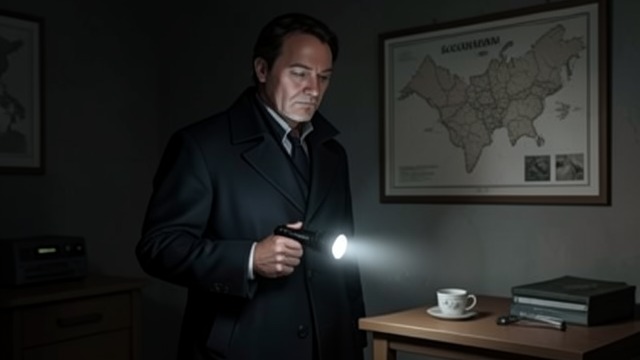
The East Area Rapist begins with nighttime assaults in Sacramento County, entering homes under cover of darkness and using a mask, gloves, and threats to control victims. The first attacks look like the work of a crude intruder, but the details reveal a more deliberate method: he watches victims, learns household routines, and arrives prepared to bind them.
Control as a Method
The assaults develop a recognizable script. He blinds victims with a flashlight, dictates where they move, and ransacks rooms while they are restrained. The combination of careful preparation and bizarre, sometimes wavering behavior makes him difficult to categorize—and tempts investigators to underestimate his intelligence.
The conflict begins as a contest between his private knowledge of each household and the police’s limited view of a crime scene after the fact. Early reports supply fragments, but there is no shared language yet for the patterns taking shape.
Couples Become Targets
Raising the Stakes
A New Kind of Victim
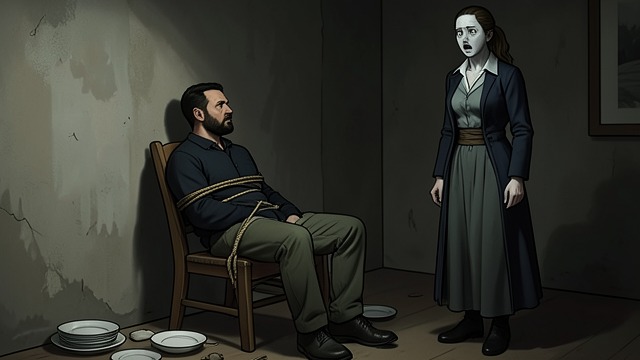
After a period of attacks on individual women, the offender begins targeting couples. He binds the man and uses the threat of harm to the woman to keep him compliant, sometimes placing dishes on his back as an alarm. The new tactic expands his control over a household while making each intrusion riskier.
Public Fear and Private Threats
As attacks accumulate, panic spreads through Sacramento’s eastern suburbs. Residents install lights, reinforce doors, and organize patrols, while investigators face growing public pressure and an offender who appears to anticipate how people will respond. His threats to kill are not only intimidation inside homes; they also force the community to imagine what he might do next.
The conflict shifts from a series of concealed assaults to an increasingly public struggle over safety and control. Despite heightened vigilance, the offender continues to choose when and where the danger becomes visible.
From Rape to Murder

Escalation Across California
A Wider Route
The offender’s attacks move beyond Sacramento into the East Bay and other Northern California communities. Investigators later understand that his movement across the state complicates the hunt: separate agencies hold separate files, and local officers may not know that a similar attack has occurred elsewhere.
Lethal Resistance
In Southern California, attacks on couples become murders. At Goleta’s Queen Ann Lane, victims escape and a neighbor pursues the fleeing offender, a close call that investigators later regard as a turning point. In subsequent attacks, men resist, shots are fired, and women are killed. The offender’s need to retain control now collides with the possibility that a victim or witness can fight back.
The change is not simply a rise in violence. Murder eliminates witnesses and makes escape more likely, while transforming a regional serial-assault investigation into a far more complicated hunt spanning multiple jurisdictions and crime types.
A Vanishing Trail

Violence and Disappearance
Southern California Murders
The murder series continues across Southern California, including the killings of Lyman Smith and Charlene Smith, and later Janelle Cruz. The offender leaves scattered similarities rather than an obvious calling card: nighttime entry, bindings, sexual assault, and violence with objects found at the scene. Local investigators must decide whether these cases belong together without a reliable cross-jurisdictional framework.
The Trail Goes Cold
After the 1986 murder of Janelle Cruz, no further known attack is attributed to the offender. Investigators and survivors are left to confront an absence that could mean death, imprisonment, or a deliberate end to the crimes. The lack of new attacks offers no resolution; it merely removes the most immediate source of evidence.
His apparent disappearance changes the conflict from pursuit to endurance. The cases remain open in the minds of investigators and victims, while the offender’s silence makes it harder to know whether the danger has passed or simply become invisible.
The Hunt Reopens

A Dormant Case Reawakens
Evidence Connects the Crimes
DNA testing links the Harrington, Witthuhn, and Cruz cases, then extends the connection to other Southern California murders. Later comparisons connect those crimes to the East Area Rapist attacks in Northern California. The biological evidence overturns assumptions that separate local investigations were dealing with separate offenders.
An Unfinished Pursuit
The DNA connection gives investigators a profile but not a name. The offender remains unidentified as Michelle McNamara, Paul Holes, and other investigators pursue records, overlooked evidence, and possible suspects. Michelle’s death in 2016 leaves the book unfinished, and the case still unresolved at the end of the account.
The conflict has become a race between accumulated evidence and the limits of what investigators can establish. The offender’s old advantage—time, secrecy, and fragmented records—now faces digital research and improved forensic methods, but neither guarantees identification.
June–October 1976
Spring–summer 1977
1978–1981
1981–1986
1996–2016
